
by
Nitin Dubey
0 (0 Ratings)
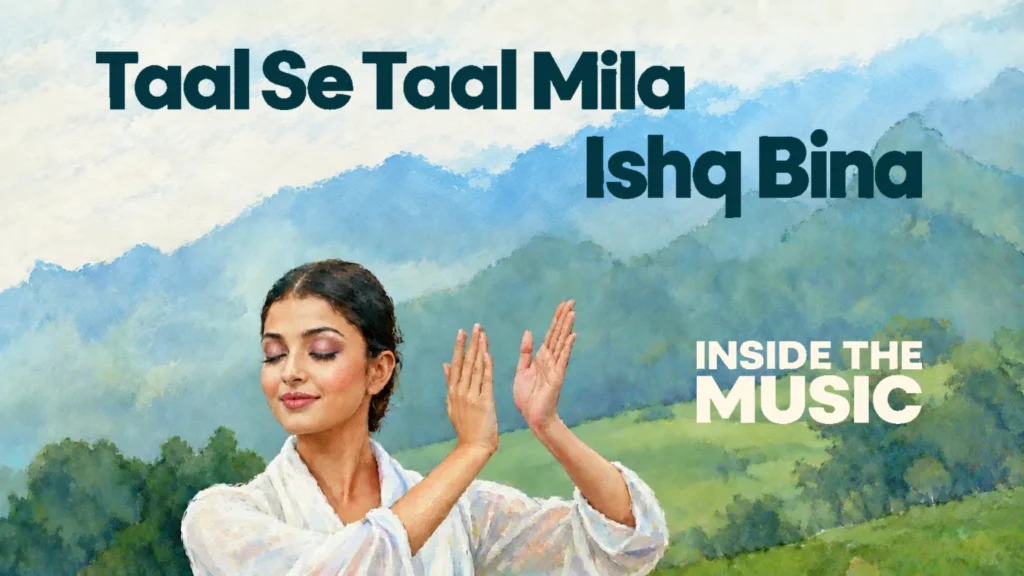
Taal – Deconstruction
This course is in 2 parts. The first part lays out what makes a good melody: contour, range, step and leap movement, repetition, tonal diversity, and contrast in its many forms, from note lengths and note placement to diatonic vs. chromatic colour.
The second part deconstructs 2 songs of Taal in detail: Ishq Bina and Taal Se Taal Mila. We go inside the DAW and look at how each song handles its scales and harmony, pedal points and implied tension, texture as it grows from a humming chorus to a solo voice, melodic rhythm as the glue that binds a song, and production ideas like controlled dissonance and why everything should not be hard quantised. Every concept is shown in a way that you can apply to your own music.
What will I learn?
- What makes a good melody: contour, range, step vs. leap, repetition, tonal diversity and contrast
- How suspended chords keep a song's mood ambiguous, and how a song reveals its colours one at a time
- How a song gives its 3 singers 3 different scales, and how major and minor voices sing together without clashing
- Pedal points and implied tension: how a bass can carry a song by doing almost nothing
- Choosing chords: inversions, voice leading, secondary dominants, diminished colours, and owning the trade-off each choice makes
- Melodic rhythm as the glue of a song: the same rhythm presented in different ways through contrast and embellishment
- Texture as a composition tool: when to reveal each voice, and why the male voice enters so late
- Production lessons from the album: controlled dissonance, keeping something constant while something changes, and why we don't hard quantise everything
Course Curriculum
Ishq Bina and Taal Se Taal Mila
3 Iconic songs -- Aur Ho by A.R. Rahman, Bhare Naina by Vishal-Shekhar & Kalank by Pritam are deconstructed in this course. What advanced music theory concepts are these iconic songs hiding in plain sight?
Introduction
03:28Basic Theory
02:40Ishq Bina
38:22Taal Se Taal Mila
28:00
Student Ratings & Reviews

No Review Yet
Requirements
- A prior working knowledge of musical concepts like chords, scales and basic modes is recommended but is not essential.